
Group Therapy in Ann Arbor, MI
Healing does not happen in a vacuum, and often, the most profound transformations occur when we are seen and understood by others. While individual therapy provides a deeply focused space for self-exploration, group therapy offers something fundamentally different: a live, relational environment where you can practice new ways of being in real-time.
A common misconception is that group therapy is a “second-tier” option compared to individual treatment. In reality, decades of empirical research show this to be untrue, especially for certain issues (see below). For example, a comprehensive 25-year meta-analysis examining therapy formats found that group psychotherapy produces clinical outcomes that are equivalent to individual therapy. Furthermore, research demonstrates that the group environment itself is a powerful mechanism for change, with strong group cohesion and interpersonal connection being essential factors.
The Power of Process Groups
Unlike structured classes or focused skill-building workshops, process groups are dynamic relational spaces. In these groups, the therapeutic work is drawn directly from the interactions, emotions, and dynamics unfolding between members in the room (the “here and now”).
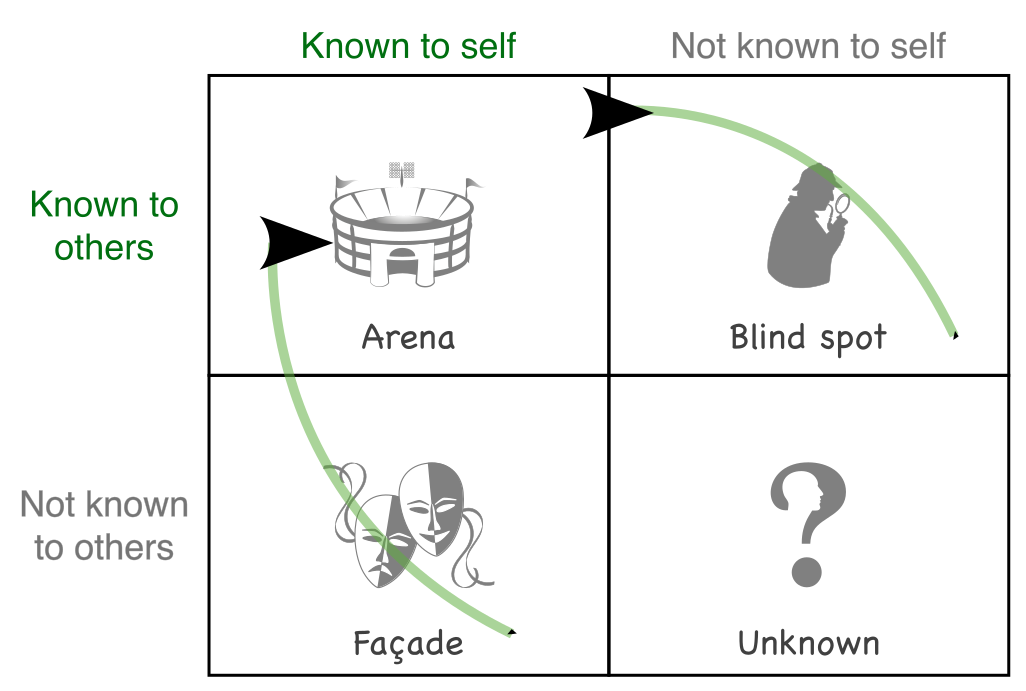
Johari Window: To See and Be Seen
A helpful framework for understanding process groups is the Johari Window, a psychological model illustrating how human awareness operates. We all have “blind spots”—aspects of our relational style, strengths, or defensive habits that are unknown to us but visible to others. In a safe, expertly facilitated process group, members provide compassionate, real-time feedback that shrinks these blind spots. You learn not just why you relate to others the way you do, but how to shift those patterns in a supportive community.
Process groups are highly effective for adults navigating:
- Major life transitions, identity exploration, and academic or professional burnout
- Relationship difficulties, including people-pleasing, boundary-setting, or fear of intimacy
- Social anxiety and difficulty asserting one’s voice
- Chronic feelings of disconnection or non-belonging
Process groups are NOT recommended for:
- Individuals in acute crisis (e.g., active suicidal ideation)
- Individuals experiencing severe psychological instability (such as active mania or psychosis)
- Those seeking highly structured, single-focus symptom management (e.g., standard manualized DBT)
- Individuals requiring immediate, intensive stabilization
Investment and Insurance
Group therapy sessions operate on a self-pay model. Rates vary by group, and I have intentionally structured the group therapy rates to be accessible—mirroring the cost of a typical therapy copay or co-insurance fee.
Why don’t I bill insurance for group therapy?
Health insurance companies only provide coverage based on strict definitions of “medical necessity.” This means they require an active psychiatric diagnosis and a rigid treatment plan focused exclusively on reducing medical symptoms. Designed to foster holistic personal growth and community connection, my groups go beyond what insurance companies are typically willing to cover. By operating outside of the insurance model for groups, we can focus on your thriving rather than just surviving.
Current Groups
Below is a list of current group offerings at Homa Psychology. To participate in a group, first schedule a free consultation with me, where we will collaboratively decide if the group would be a good fit for you. Scheduling a consultation does not commit you to joining the group. It is a time for you to raise any questions or concerns you may have before deciding on whether or not you’d like to join.

Group Therapy for Fathers
Fatherhood brings profound meaning and purpose, but it can also introduce unexpected pressures, shifting identities, and feelings of isolation. This upcoming group provides a supportive, relational space for fathers to connect, untangle systemic and personal expectations of masculinity and parenting, and foster a deeper understanding of this life chapter together.
Currently forming a waitlist for our next cohort.
Use the link below to schedule a free consultation with Dr. Amir to discuss more about the group and see if it would be a good fit for you. If so, you will be added to the waitlist.